Proxy Pool Diversity: Why IP Source Mix Lowers Your Block Rate
A pool that draws from one source fails in one way. How mixing residential, datacenter and mobile routes, plus ASN and geo spread, builds real resilience.
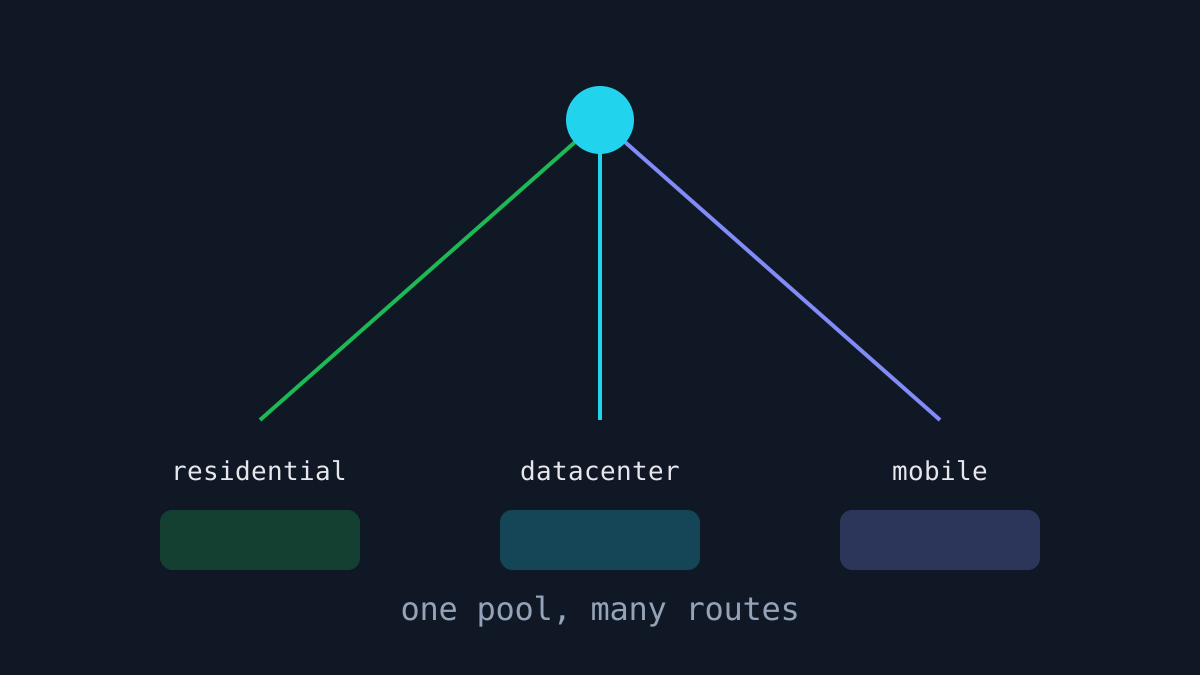
One Source Fails in One Way
A proxy pool that draws from a single subnet, a single ASN or a single proxy type inherits one failure mode. When that source degrades, everything routed through it degrades together. Proxy pool diversity is the deliberate mixing of sources so that no single failure takes down a whole workload. It is the difference between a pool and a pile.
Think of it as insurance paid in configuration rather than in money. A diverse pool costs a little more to design, but it fails far more gracefully.
Mix Types, Not Just Addresses
The most useful diversity is across proxy type. Residential routes handle high-friction targets, datacenter routes carry bulk throughput, and mobile routes cover carrier-specific experiences. Routing by domain, as the residential vs datacenter framework describes, is the first step toward a pool that matches type to workload.
A job that lives entirely on residential IPs is still single-source in the way that matters. Spreading it across types gives you somewhere to fail over to when one tier degrades.
Spread ASN and Geo
Within a type, spread across autonomous systems and geographies. A pool that is all one ASN fails when that ASN is targeted. A pool that is all one metro fails when a regional issue hits. The broader the distribution, the less any single incident matters.
This is especially true for residential pools, where quality varies by subnet. The health baseline guide shows how to spot a weak subnet before it drags your success rate down.
Design for Failover
Diversity only helps if the pipeline can use it. Build routing that shifts a domain to a different pool when its primary degrades, rather than retrying the same failing route. The resilient infrastructure guide and the rotation patterns cover the session mechanics that make failover clean.
The docs walk through configuring multiple pools on the gateway, and the proxies catalog shows the tiers you can mix. A pool that can move is a pool that survives.
The Diversity Checklist
Track type mix, ASN spread and geo spread as separate dimensions. If any one of them collapses to a single value, you have a single point of failure wearing a pool costume. Fix it before a target finds it for you.
Diversity is not complexity for its own sake. It is the cheapest way to turn a block on one route into a non-event for the whole job.