Web Data Quality: Validation and Deduplication After Collection
Collection is only half the job. How data teams validate, dedupe and reconcile scraped records so downstream systems trust what the proxy pool delivered.
Collection Is Only Half the Job
A proxy pool can deliver pages reliably and still feed you junk. Schemas change, fields go missing, duplicates multiply and timestamps drift. Web data quality is the discipline that happens after collection: validating what arrived, removing what repeats, and reconciling what conflicts. Without it, a beautiful pipeline produces untrustworthy data.
Treat quality as a first-class layer, not an afterthought you bolt on when someone complains.
Validation Catches the Silent Breaks
The most dangerous failures are silent. A target changes its HTML and your parser still runs, but it now extracts the wrong field or nothing at all. Schema validation — checking that each record has the fields, types and ranges you expect — catches those breaks before they reach a warehouse.
Validate at ingestion, not at query time. The health baseline guide shows how to instrument collection so you notice when a source starts delivering oddly-shaped data.
Deduplication Keeps Records Honest
Scraping the same URL twice, retrying after a timeout, or crawling overlapping discovery paths all create duplicates. Dedupe by a stable key — a product ID, a URL plus a timestamp — and keep a record of what you removed. Silent duplicates inflate counts and poison any analysis built on them.
The retry and backoff guidance also helps here, because a spike in retries often precedes a spike in duplicates. Fixing the retry behaviour reduces the dedupe load.
Reconciliation Resolves Conflicts
When two sources disagree, you need a rule. Prefer the fresher record, the more authoritative source, or the one that passes stricter validation. Write the rule down and version it, so you can explain why a number changed when someone asks.
For the catalog and pricing workloads most teams run, the price monitoring guide and the use cases show how reconciliation fits into a real pipeline. The docs cover how to configure collection so the quality layer has clean input to work with.
A Minimal Quality Loop
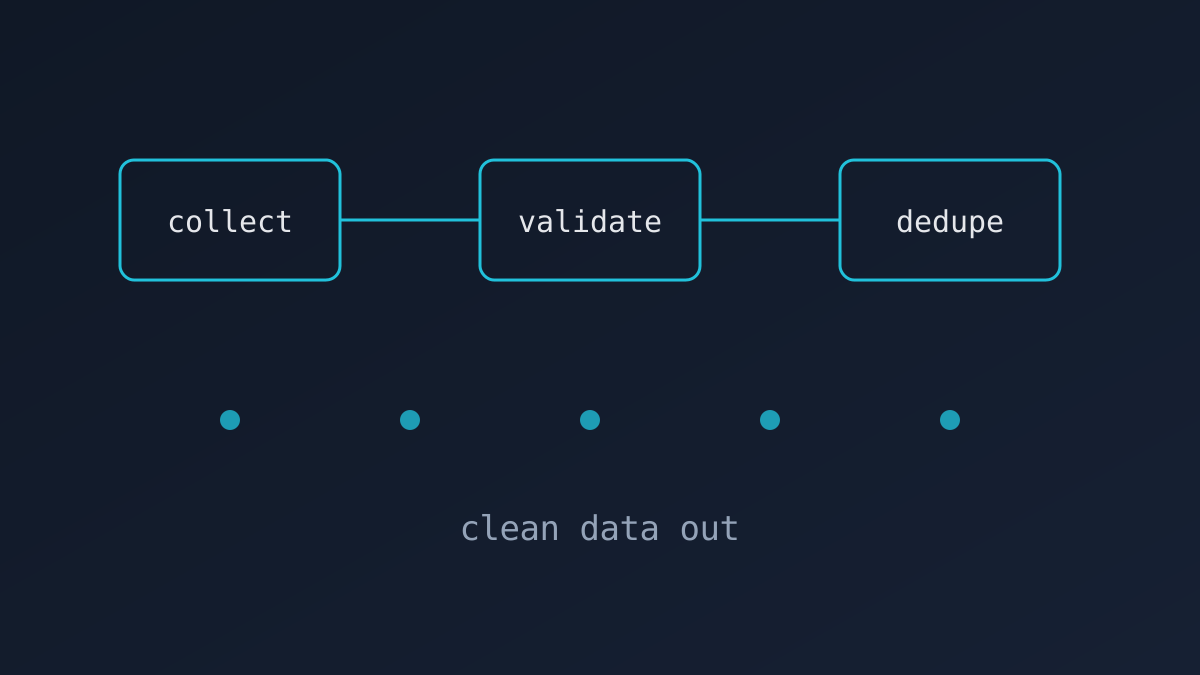
Collect, validate, dedupe, reconcile, then review. Instrument each stage so you can see where records are dropped and why. A pipeline that tells you it rejected a batch, and shows you the reason, is a pipeline you can trust.
Quality is not the enemy of speed; it is what makes speed safe. Build the loop early and every gigabyte your proxy pool delivers becomes data you can actually stand behind.